Dark Sky Optics
Human perception of meteor showers depends critically on atmospheric contrast. A backyard observer situated in a suburban Bortle Class 6 environment may record only 8 to 12 meteors per hour during a peak Perseid storm, whereas an observer under Bortle Class 1 or 2 skies will record 80 to 100 within the same interval. The dimmer meteors (magnitudes +3 to +6) constitute over 85% of the total debris stream, and light pollution completely erases them.
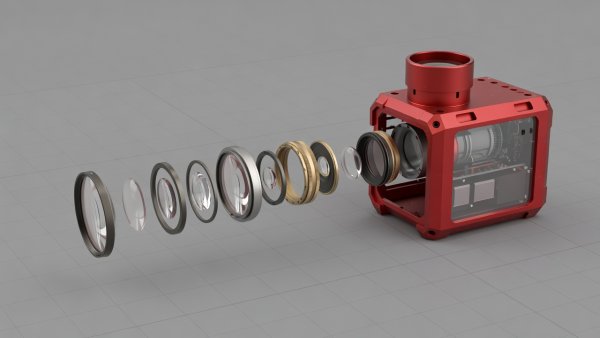
The Fast-Glass Rule
Because a meteor flash lasts from 0.1 to 1.5 seconds, lengthening your camera's exposure time does not brighten the meteor itself; it only brightens the background sky glow. The sole parameter governing meteor capture brightness on a camera sensor is lens entrance pupil diameter: optical speed. Always shoot wide open at f/1.4, f/1.8, or f/2.8.
The Bortle Dark-Sky Scale
Developed by astronomer John E. Bortle in 2001, this nine-level numerical scale quantifies astronomical observability based on limiting celestial magnitudes and zodiacal light visibility:
| Bortle Class | Sky Description | Naked-Eye Limiting Mag | Meteor Sighting Efficiency |
|---|---|---|---|
| Class 1 | Excellent Dark-Sky Site (Zodiacal light casts shadows) | 7.6 to 8.0 | 100% (Full ZHR observable) |
| Class 2 | Truly Dark Site (Milky Way displays high contrast) | 7.1 to 7.5 | 85%–95% |
| Class 3 | Rural Sky (Some light domes on horizon) | 6.6 to 7.0 | 65%–80% |
| Class 4 | Rural/Suburban Transition | 6.1 to 6.5 | 40%–55% |
| Class 6 | Bright Suburban Sky (Milky Way invisible near zenith) | 5.1 to 5.5 | 10%–20% |
| Class 8/9 | City Core / Inner-City (Only Moon & planets) | 4.0 or worse | < 2% (Fireballs only) |
Preserving Scotopic Night Vision
Human eyes switch from photopic (cone-dominated) vision to scotopic (rod-dominated) vision through the slow synthesis of rhodopsin protein. Exposure to white or blue light destroys rhodopsin in milliseconds, requiring a fresh 30-minute synthesis cycle. Always outfit all field lighting with deep red filtration (wavelengths beyond 620nm) and shield optical viewfinders during long exposure cycles.
Sanctuary Verification
When selecting expedition sites, verify recognized designations by DarkSky International (formerly IDA), such as Dark Sky Parks and Sanctuaries. Sites like Cherry Springs State Park (Pennsylvania), Big Bend National Park (Texas), the Central Idaho Dark Sky Reserve, and the Galloway Forest Park (Scotland) guarantee nocturnal light restrictions and unobstructed horizons.