The August Perseids
The Perseids stand as the most widely observed celestial spectacle in the Northern Hemisphere. Peaking annually between August 11 and 13, the shower delivers reliable Zenithal Hourly Rates (ZHR) ranging from 80 to 100 meteors under pristine conditions. The parent body responsible for this celestial dust corridor is periodic comet 109P/Swift-Tuttle, an enormous 26-kilometer wide nucleus discovered independently in July 1862 by Lewis Swift and Horace Parnell Tuttle.
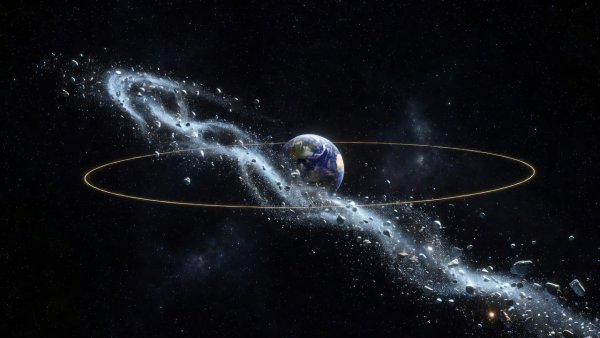
The 133-Year Filament Web
Swift-Tuttle completes one highly eccentric orbit around the Sun every 133 years. Over millennia, gravitational perturbations caused by Jupiter and Saturn have smeared out ancient dust trails into layered ribbons or "filaments." When Earth intersects an intact, dense filament shed during past perihelion passages (such as 1862 or 1479), observers experience intense outbursts exceeding 200 meteors per hour.
Orbital Dynamics and Atmospheric Ablation
Perseid meteoroids enter the upper atmosphere at an impressive velocity of 59 kilometers per second (approximately 212,000 km/h). Because of this elevated velocity, the friction created as atmospheric gas molecules compress against the leading edge of the grain creates temperatures exceeding 1,650 degrees Celsius (3,000°F).
This kinetic violence results in fast, bright white-yellow streaks that frequently leave persistent ionization trails—incandescent columns of energized gas that drift in high-altitude jet streams for several seconds or even minutes after the dust grain has fully vaporized.
Locating the Perseus Radiant
The radiant point lies in the northern constellation of Perseus, close to the boundary with Cassiopeia's characteristic "W" asterism. While meteors appear to originate from this coordinate (Right Ascension 03h 04m, Declination +58°), field observers must not look directly at the radiant. Meteors appearing directly on the radiant will have foreshortened, stumpy paths. For maximum streak length and dramatic photography, orient your gaze 45° to 90° away from Perseus toward darker areas near Ursa Major, Pegasus, or Cygnus.
| Observation Metric | Typical Perseid Specification | Operational Recommendation |
|---|---|---|
| Peak Date Range | August 11–13 (Peak night: Aug 12) | Begin watch windows starting at 23:00 local time |
| Average Entry Speed | 59 km/s | Short shutter intervals (15–20 sec) to avoid sky fog |
| Mean Fireball Ratio | Highest among summer streams | Keep wide lenses centered on open azimuth |
| Radiant Coordinates | RA 03h 04m | Dec +58° | Point optical gear 45° away into dark regions |
Ensure you allow at least 40 minutes for full dark adaptation. Pack insulated blankets to mitigate dewfall, and log your individual sightings using our field registry.